
By Chess Praxis Team
12 March, 2026
5 min read
Blog Type: Chess Training
Visualization Training
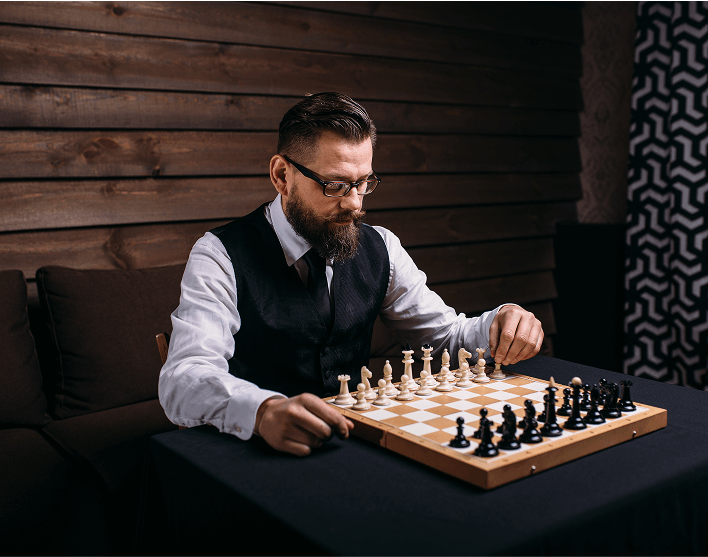
Visualization is one of the most important skills in chess. It helps players calculate future positions, track piece movement, and make clearer decisions without moving pieces on the board.
At Chess Praxis, students train visualization through guided exercises, tactical patterns, blindfold-style drills, and real-game analysis so they can think multiple moves ahead with confidence.
Ignoring the Center
Many beginners develop pieces without thinking about board control. The center is key—it gives mobility, influence, and space.
Pro Tip:Always aim to control e4, d4, e5, and d5 early in the game.
Moving the Queen Too Early
Many beginners develop pieces without thinking about board control. The center is key—it gives mobility, influence, and space.
Pro Tip:Always aim to control e4, d4, e5, and d5 early in the game.
Not Castling Early
Many beginners develop pieces without thinking about board control. The center is key—it gives mobility, influence, and space.
Pro Tip:Always aim to control e4, d4, e5, and d5 early in the game.
Hanging Pieces
Many beginners develop pieces without thinking about board control. The center is key—it gives mobility, influence, and space.
Pro Tip:Always aim to control e4, d4, e5, and d5 early in the game.
Playing Without a Plan
Many beginners develop pieces without thinking about board control. The center is key—it gives mobility, influence, and space.
Pro Tip:Always aim to control e4, d4, e5, and d5 early in the game.
Ignoring Time
Many beginners develop pieces without thinking about board control. The center is key—it gives mobility, influence, and space.
Pro Tip:Always aim to control e4, d4, e5, and d5 early in the game.
Chess is a game of deep strategy, but even the best players started by making some classic beginner errors. In this post, we’ll walk you through five common mistakes—and how to avoid them to sharpen your game right away. Chess is a game of deep strategy, but even the best players started by making some classic beginner errors. In this post, we’ll walk you through five common mistakes—and how to avoid them to sharpen your game right away.
Conclusion
Chess rewards thoughtfulness and practice. Avoiding these five errors can instantly improve your confidence and performance on the board. Every grandmaster once made these same mistakes—what matters is learning from them.
"Want personalized feedback on your games?"
Recommended Articles
Must watch our trending blogs
Chess Praxis Team
12 March, 2026
Understand development, center control, king safety, and piece coordination to begin games with confidence.
Read More
Chess Praxis Team
12 March, 2026
Learn how to form practical plans from pawn structures, weak squares, and piece activity.
Read More
Chess Praxis Team
12 March, 2026
Build the endgame habits needed to convert winning positions and save difficult games.
Read More5 Common Mistakes Every Beginner Makes in Chess
Cutting Edger
12 March, 2026
This is exactly what I needed as a beginner! I've been moving my queen out way too early—now I know why I keep getting into trouble 😅
Cutting Edger
12 March, 2026
This is exactly what I needed as a beginner! I've been moving my queen out way too early—now I know why I keep getting into trouble 😅
GET IN TOUCH
Have Questions? Let’s
Talk Chess.
Whether you want to join our academy, schedule a demo class, enroll in a training program, or learn more about Chess Praxis, we’d love to hear from you.